Case Study: Net Zero Action Accelerator
Role: UX Lead | Teammates: Strategist, Designer, Developer, UX Director and Dev Director Oversight | Tools used: Figma
Studio: Constructive Studio | Client: EDF+Business
Background
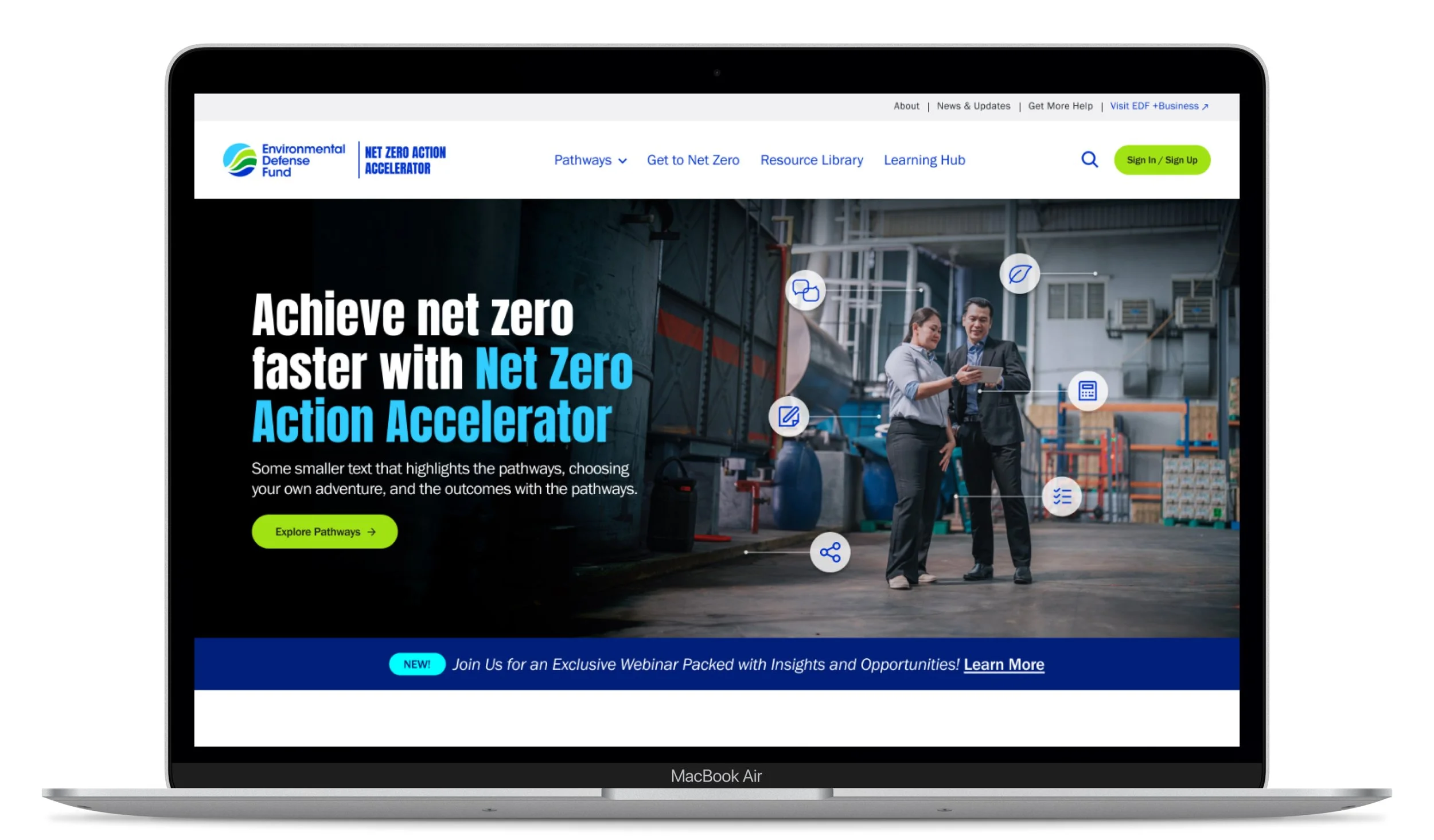
Many organizations and businesses have made climate commitments, but do not have clear plans on how to make good on those pledges. The Net Zero Action Accelerator produced by the Environmental Defense Fund is a product that is designed to help them deliver on their climate commitments.
The Environmental Defense Fund (EDF) creates solutions to help cut pollution and works with organizations and governments to tackle environmental issues. In its work, EDF has implemented several different kinds of custom solutions to help curb pollution. These solutions were tailored for specific organizations or situations, but elements of these solutions could be useful in developing new plans for other organizations. EDF wanted to empower organizations to create their own solutions and came to Constructive to create a new platform that would allow users to do that.
Objectives
Help sustainability professionals at large businesses plan their next tactical steps towards getting to Net Zero.
Engage visitors wherever they would like to start their implementation.
Encourage visitors to find resources that will help them take action.
Make it easy for visitors to share their findings with colleagues.
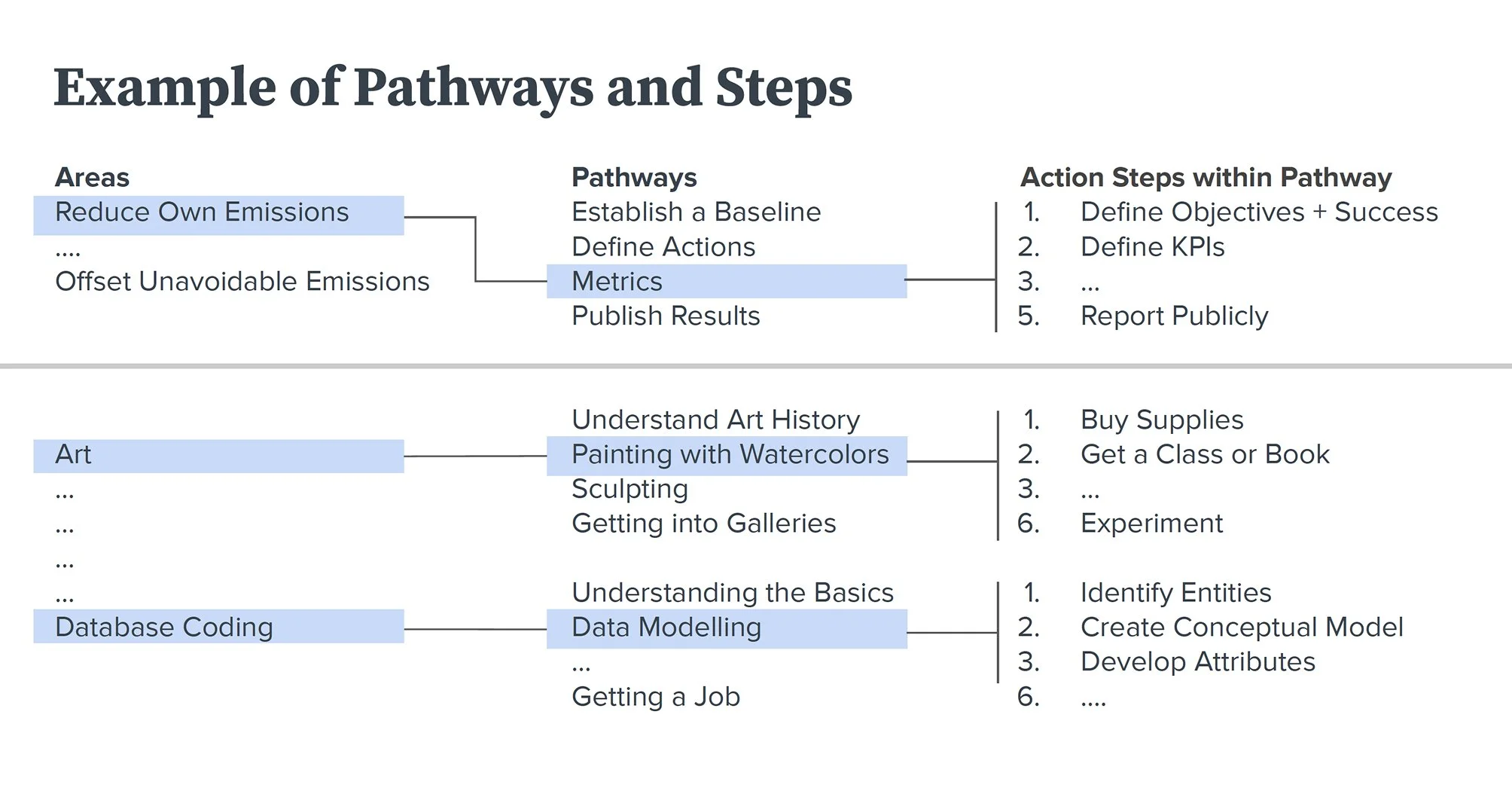
Mapping Out User Journeys
I worked with a digital strategist to determine how the client wanted visitors to interact with the platform. EDF’s solutions are broken down into pathways with multiple action steps within that will help achieve a certain goal. Visitors needed to be able to see the recommendations in each pathway and be encouraged to view additional pathways that they could follow and add to their implementation plans.
Visitors needed to understand that each pathway has a set of action steps that they needed to take to achieve a goal.
Visitors needed to be able to understand action steps and pathways within a larger context of topic areas.
Visitors needed to be encouraged to explore other pathways and action steps.
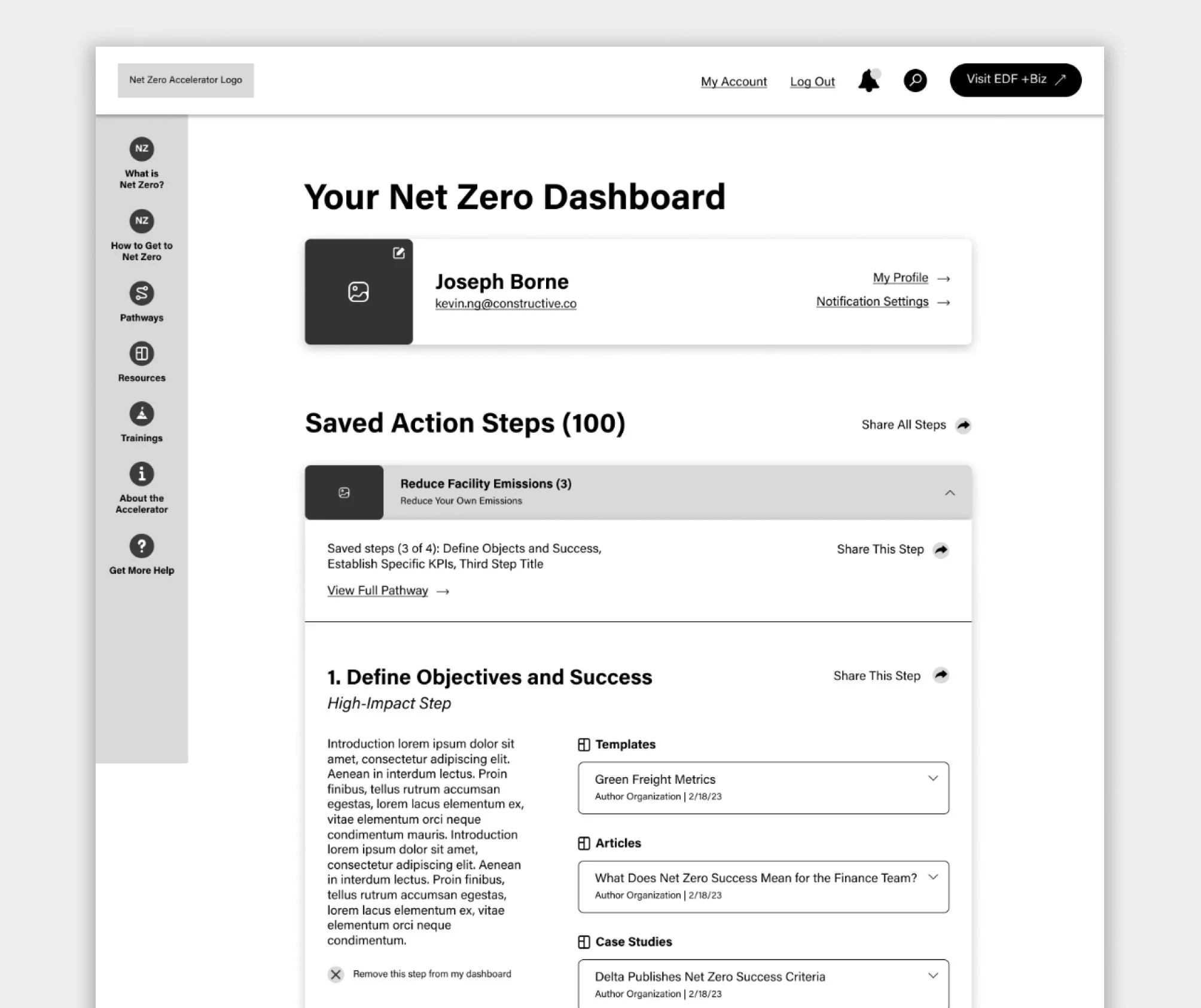
Making Pathways in Wireframes
The concept was an abstract one, since there was a lot of cross-linking of resources that EDF wanted to implement. I worked with Constructive’s development team to build a platform that would allow visitors to sign in a manage a personal library of saved resources and managed user signup data. The new platform would need to accomplish the following goals:
Visitors could filter pathways by topic areas.
Visitors could sign up and create a profile on the site.
Visitors could save full pathways or specific action steps.
Visitors could use a personal dashboard to view and share their saved pathways and action steps.
Visitors would need be able to sign up for training sessions.
Key Features
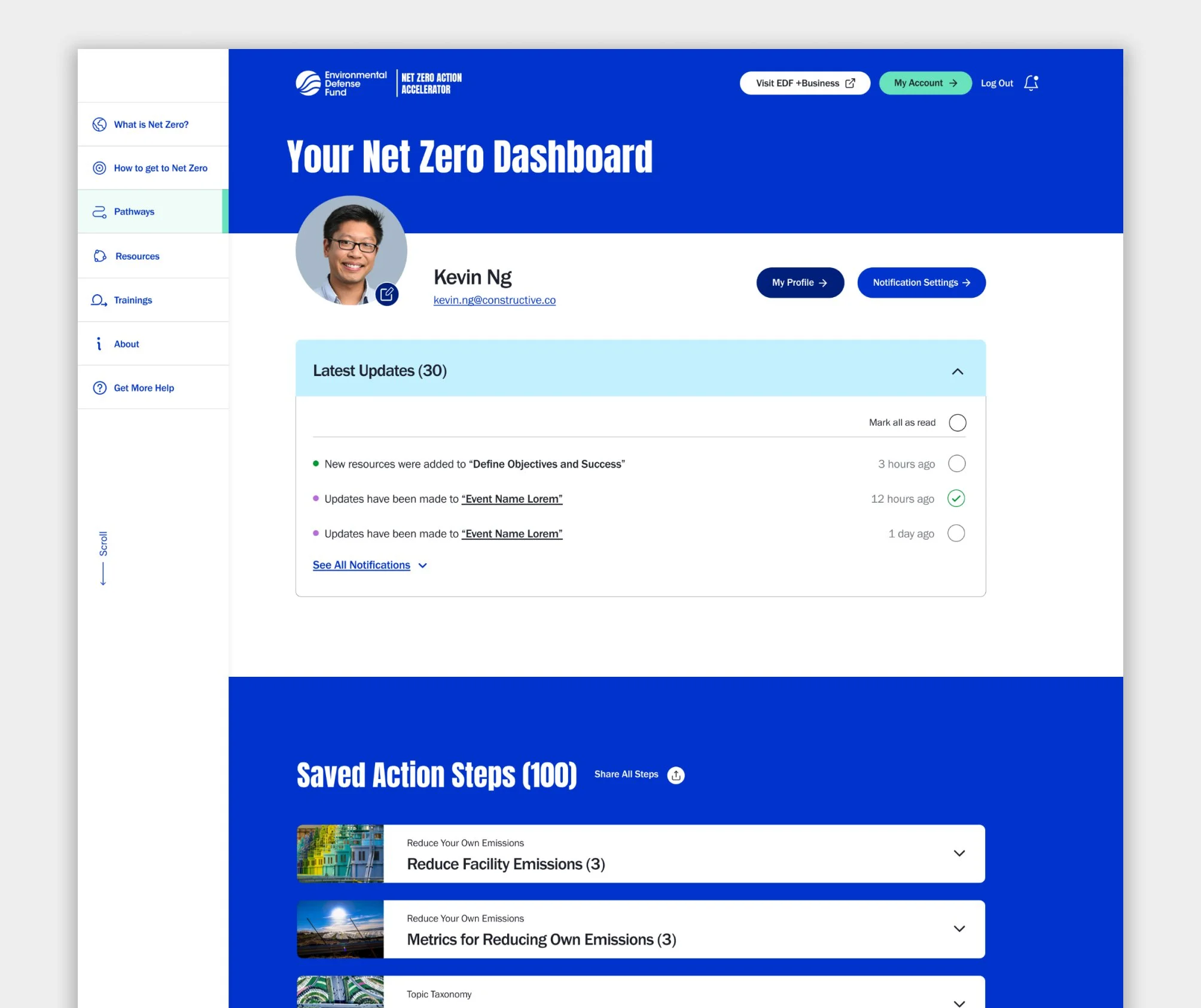
Personal Dashboard
I created a one-stop dashboard where visitors would have access to all of their saved items and could edit their notification settings.
Visitors could quickly view and clear out notifications for updates to any pathways or action steps they have saved to their profile.
Visitors could view and share everything that they have saved on one page.
Visitors could edit and unsave pathways that they no longer need.
Visitors could easily update their notifications settings.
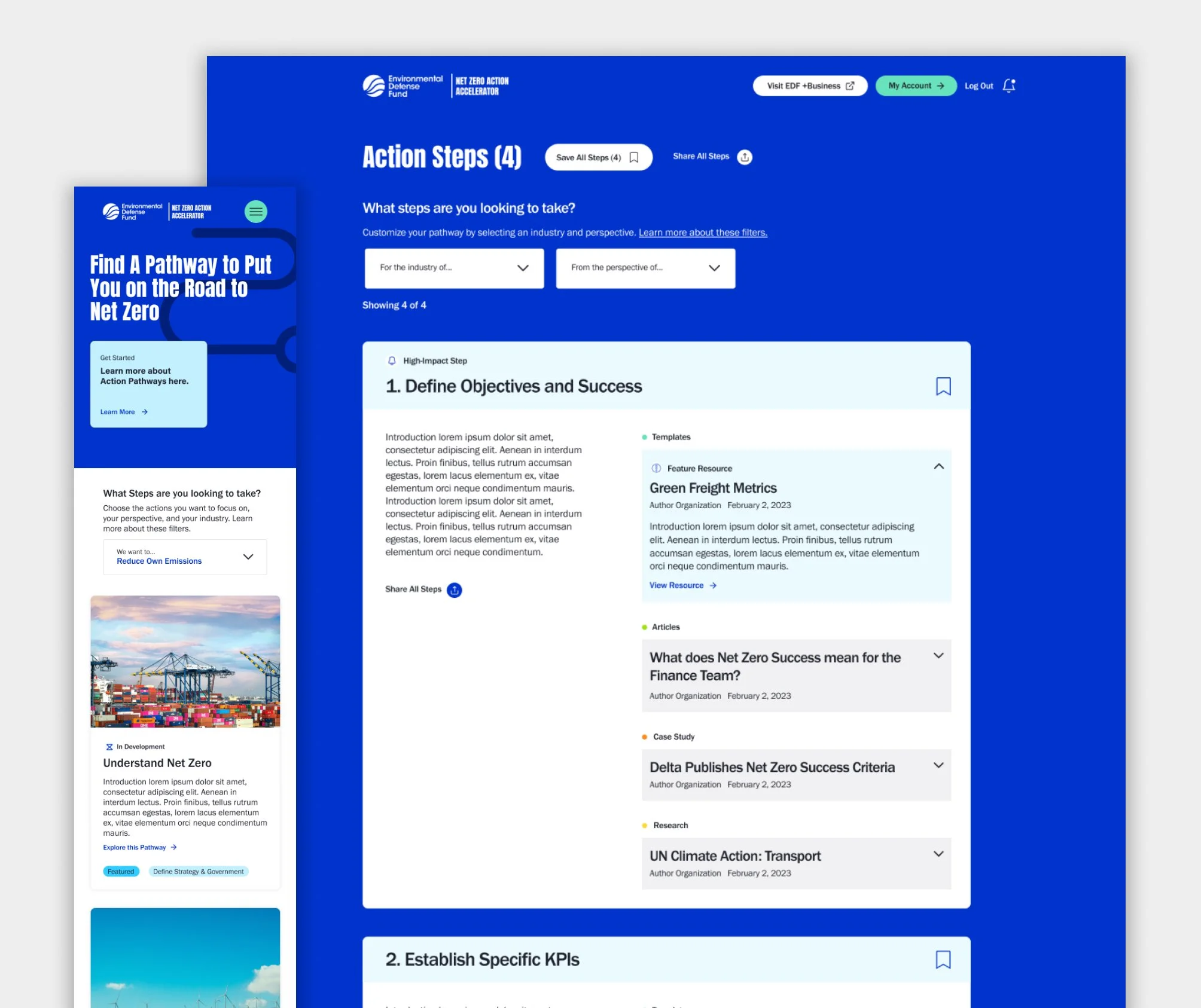
Taxonomies and Filtering
I worked with EDF and developed a taxonomical filtering system, tapping into EDF’s topical expertise and utilizing findings from initial user interviews. This allowed visitors to explore the different implementation pathways in an organic way.
Taxonomies were based off of organizational end-goals that visitors could identify with and see their organizations working towards.
I implemented filtering at multiple decision points on the site based on audiences’ thought patterns, thinking bigger picture and getting more granular as they dig in.
Broader topics at the start allow users to dip their toes in a subject before fully committing to investigating a plan.
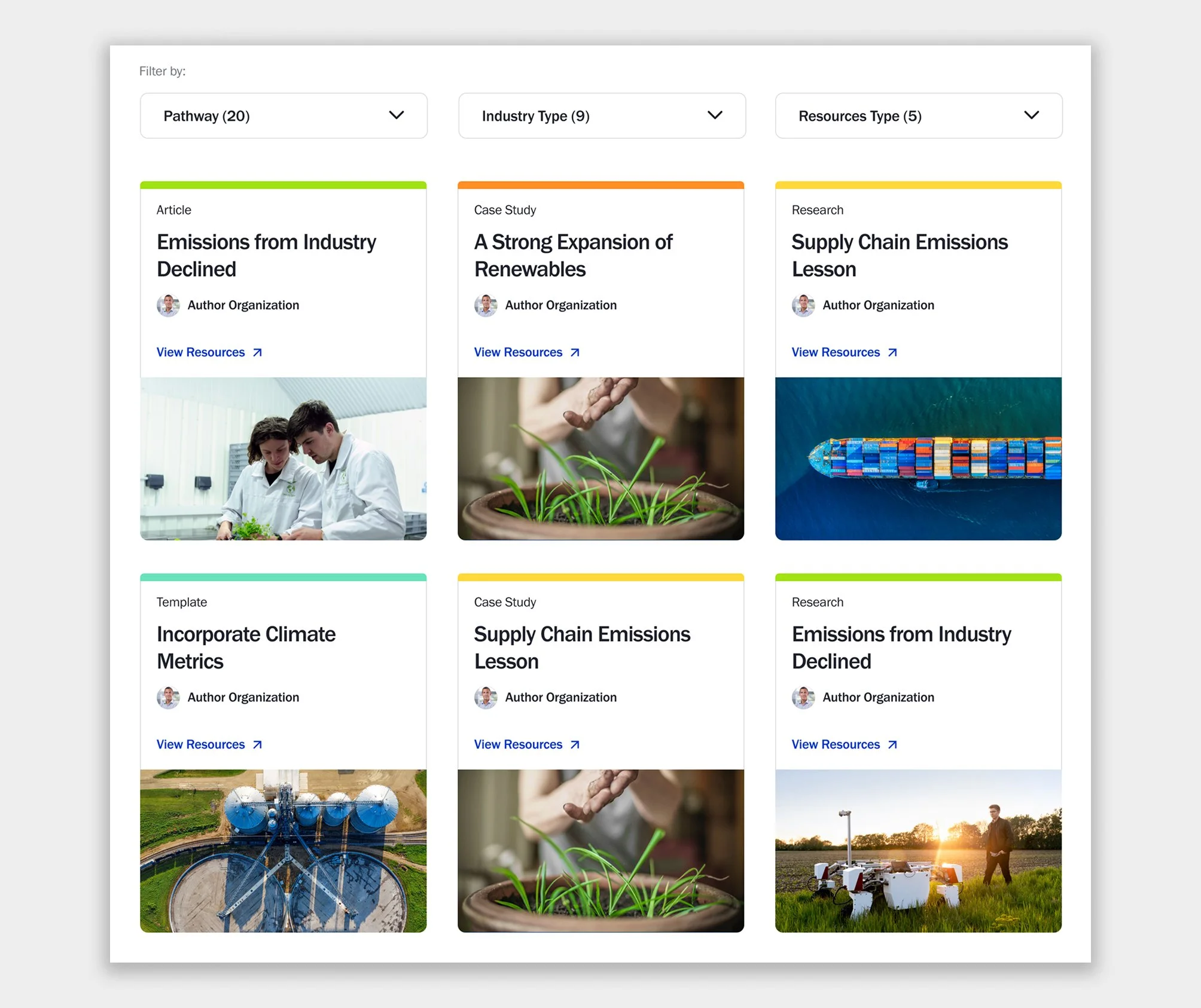
Maintaining Taxonomy Throughout
I carried the taxonomy system developed for pathways through to EDF’s resources hub and expanded upon it with basic content type category filtering that allowed visitors to quickly find valuable info.
I worked with my fellow designer to develop a color code in the design system that helped identify different resource types.
By maintaining the taxonomy, visitors become familiar with the platforms language and become more comfortable navigating the website.